
Petty Officer 2nd Class Cory Sumner, a San Francisco Maritime Enforcement Specialist, directs Blasjo, an explosive detection K-9, during a search of AT&T Park Thursday, March 27, 2014. The goal of the exercise is to get the explosive detection K-9s, like Blasjo, prepared to do sweeps in preparation of the baseball season. U.S. Coast Guard photo by Petty Officer 3rd Class Adam Stanton
Categories:
People
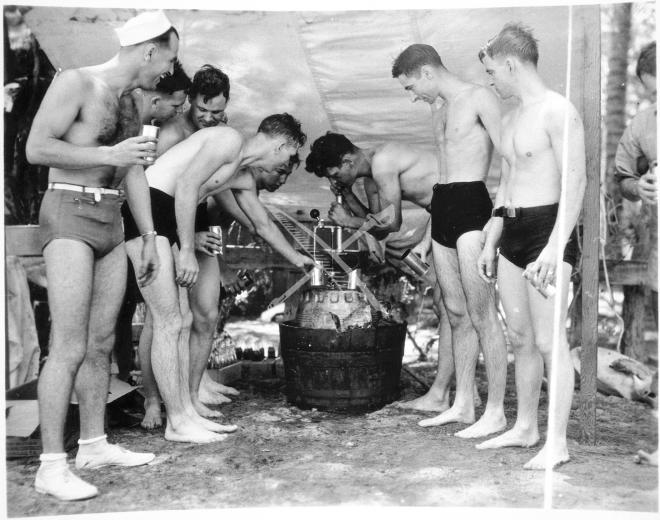
Men of Enterprise CV-6s A Division line up at the beer keg; Division Picnic, October 1941.
Categories:
People
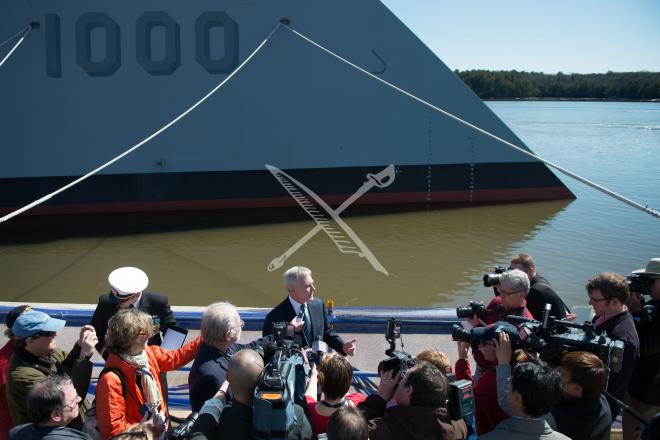
140412-N-PM781-001
BATH, Maine (April 12, 2014) Secretary of the Navy (SECNAV) Ray Mabus speaks with media before the christening ceremony for the Zumwalt-class guided-missile destroyer (DDG) 1000. The ship, the first of three Zumwalt-class destroyers, will provide independent forward presence and deterrence, support special operations forces and operate as part of joint and combined expeditionary forces. The lead ship and class are named in honor of former Chief of Naval Operations Adm. Elmo R. Bud Zumwalt Jr., who served as chief of naval operations from 1970-1974. (U.S. Navy photo by Mass Communication Specialist 1st Class Arif Patani/Released)
Categories:
People
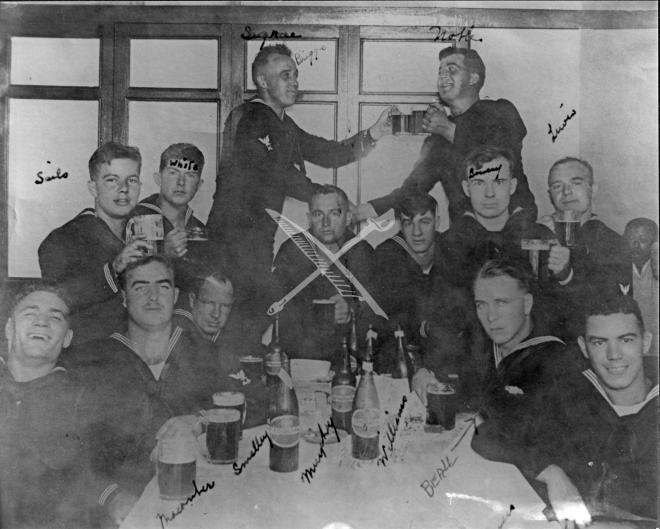
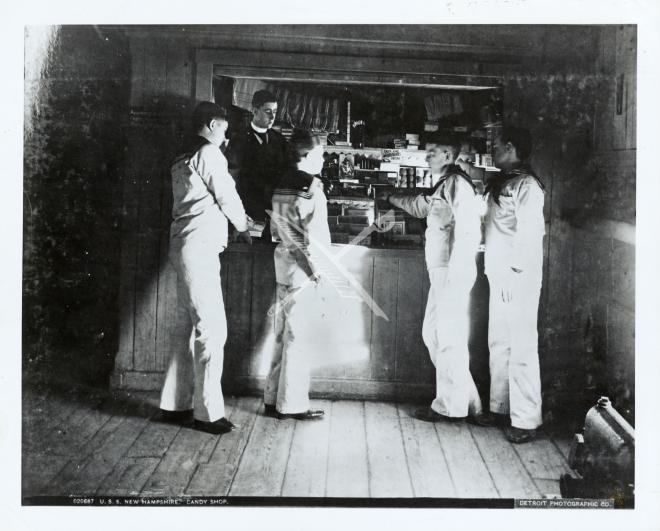
Four U.S. sailors and one shopkeeper at the candy shop on the USS New Hampshire.
Categories:
Recreation and Rest
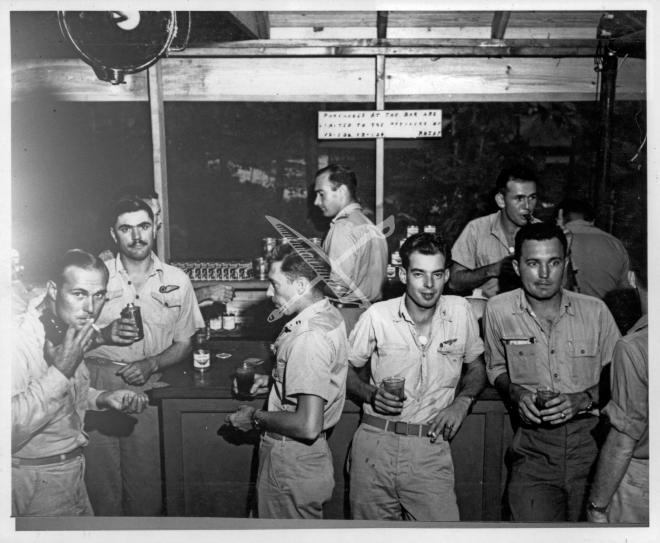
Officers of U.S. Navy Bombing Squadrons 104 and 106 enjoy a drink in the Officers Club at their air base in the South Western Pacific. WWII Era.
Categories:
Recreation and Rest
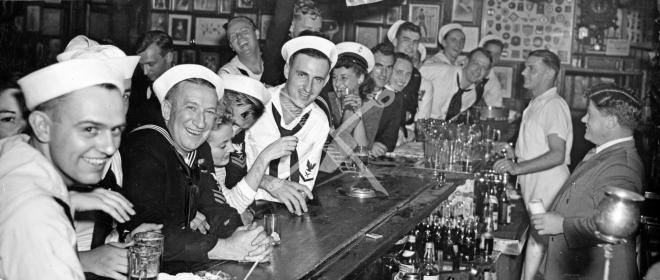
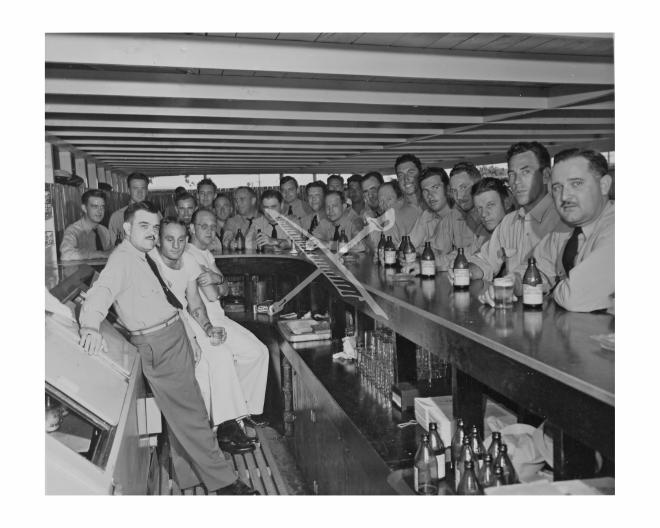
A view looking down at a bar lined with grinning sailors. Two women, one wearing the cap of an officer, can also be seen. Two smiling bartenders look happily upon the sailors. Circa 1940s.
Categories:
Recreation and Rest
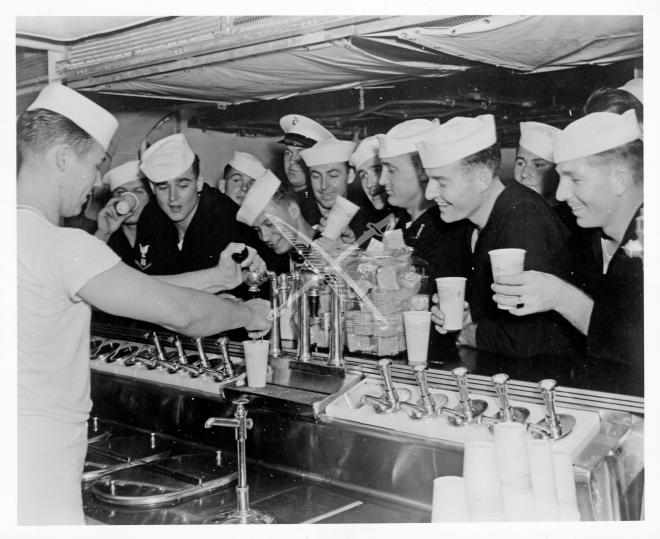
Sailors aboard the aircraft carrier USS Wasp eagerly cluster around the ships soda fountain to obtain ice cream or floats. It is unclear which vessel, the USS Wasp (CV-7) or USS Wasp (CV-18), is pictured in this photograph. WWII Era.
Categories:
Recreation and Rest
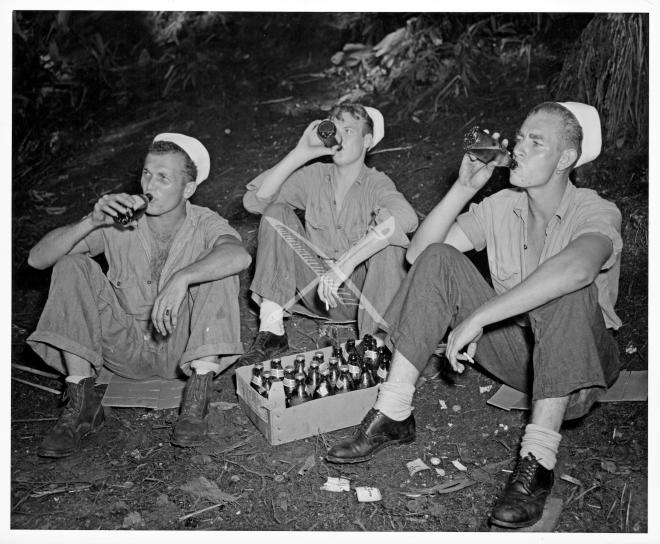
Time Out From War -- Under the palms of the beautiful Florida Islands in the Pacific, fighting men of the U.S. Navy become for a while carefree youths again as they relax at the Recreation Center. Facilities for 16 sports are provided there, and beer and soft drinks to cool off the servicemen athletes. One of a number of such centers sponsored by the Navy to offset the strain of combat duties, the installation was built and is being run by SEABEES., , Three enlisted men sit around around a case of beer, partially filled with empty bottles, and chug their drinks in unison. WWII Era.
Categories:
Recreation and Rest
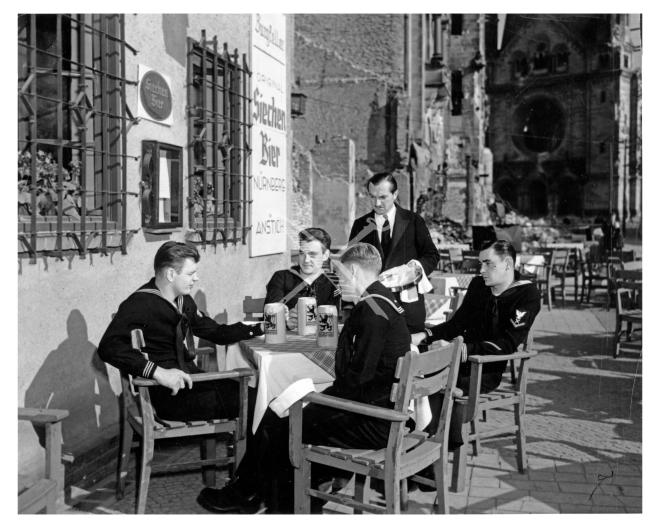
Four U.S. sailors sit outside and enjoy some beer at a restaurant in the American sector of Berlin, Germany on or around 21 February 1950. A local waiter tends to their table.
Categories:
Recreation and Rest
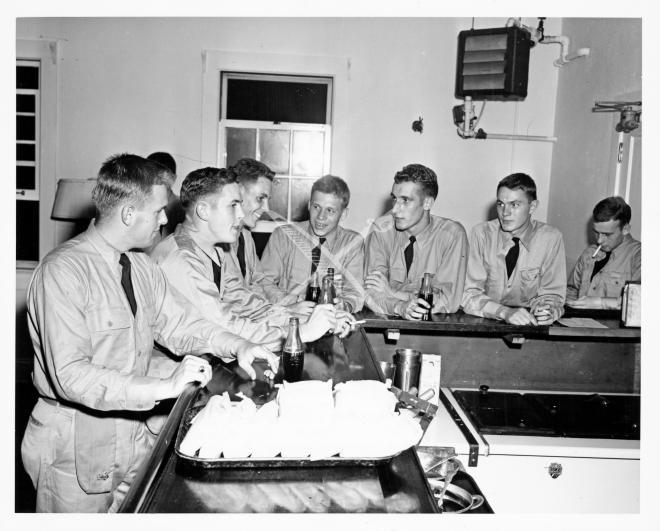
U.S. Naval Aviation Cadet Program Offers Career Opportunities To Young America -- Eighteen in a series of forty-eight. The soda fountain is always a popular oasis at any Naval activity, not only for the soft drinks, but for the opportunity provided to bang ears and swap scuttlebutt. Shown above are (left to right) Midshipman T.A.Wills, Muskegon, Michigan; Midshipman D.L. Peet, Niagara Falls, New York; Midshipman F.N. Kivette, San Diego, California; Midshipman R.J. Sirgel, Cleveland, Ohio; Midshipman D.C. Conrad, Pittsburgh, Pennsylvania; Midshipman R.S. Bick, Flushing, New York; Midshipman L.E. Penzel, Buffalo, New York. This photograph was released on 3 December 1948.
Categories:
Recreation and Rest
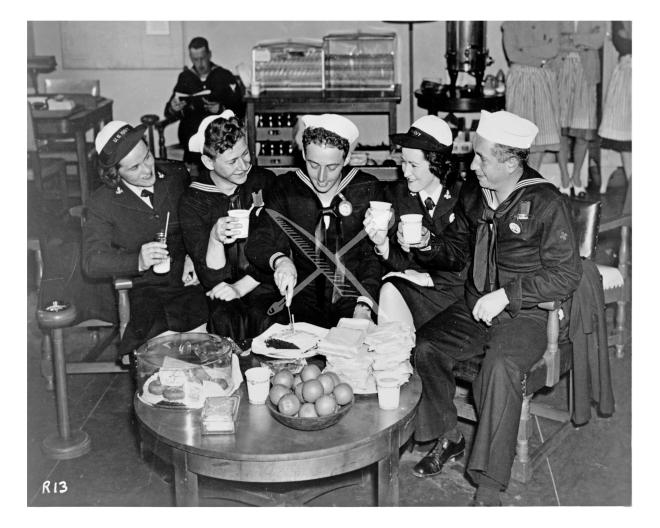
Five Navy personnel, three men and two women, enjoy drinks and pastries. Undated.
Categories:
Recreation and Rest
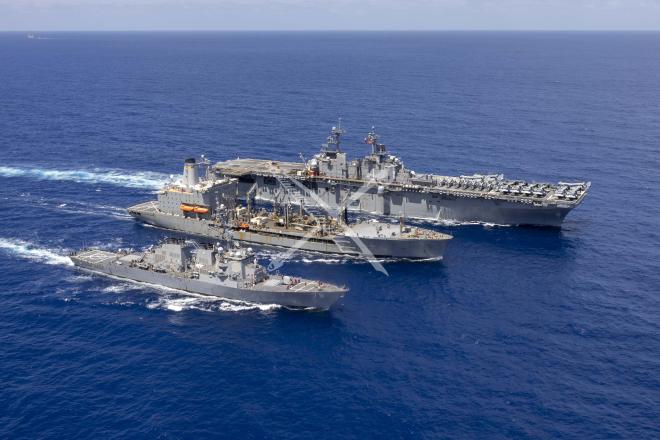
USS Wasp (LHD-1) conducts a replenishment at sea with the USNS John Lenthall (T-AO-189) and USS Porter (DDG-78).
Categories:
Ships and Submarines
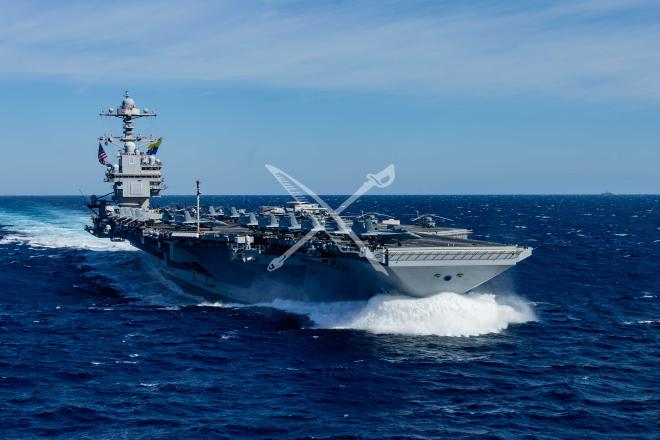
USS Gerald R. Ford (CVN-78) underway in the Atlantic, November 2024.
Categories:
Ships and Submarines
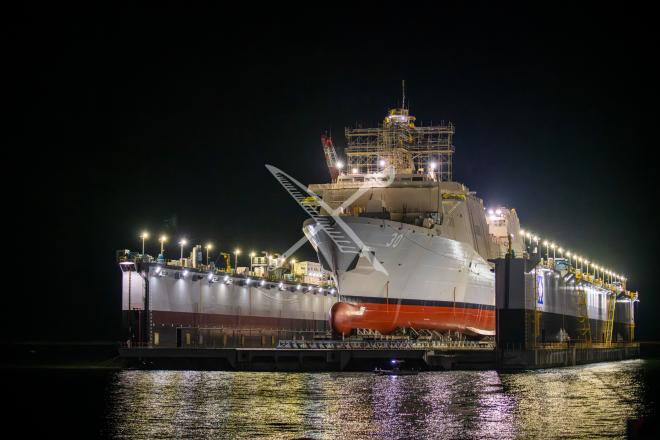
USS Harrisburg (LPD-30) sits on Ingalls Shipbuilding dry dock in October 2024.
Categories:
Ships and Submarines